
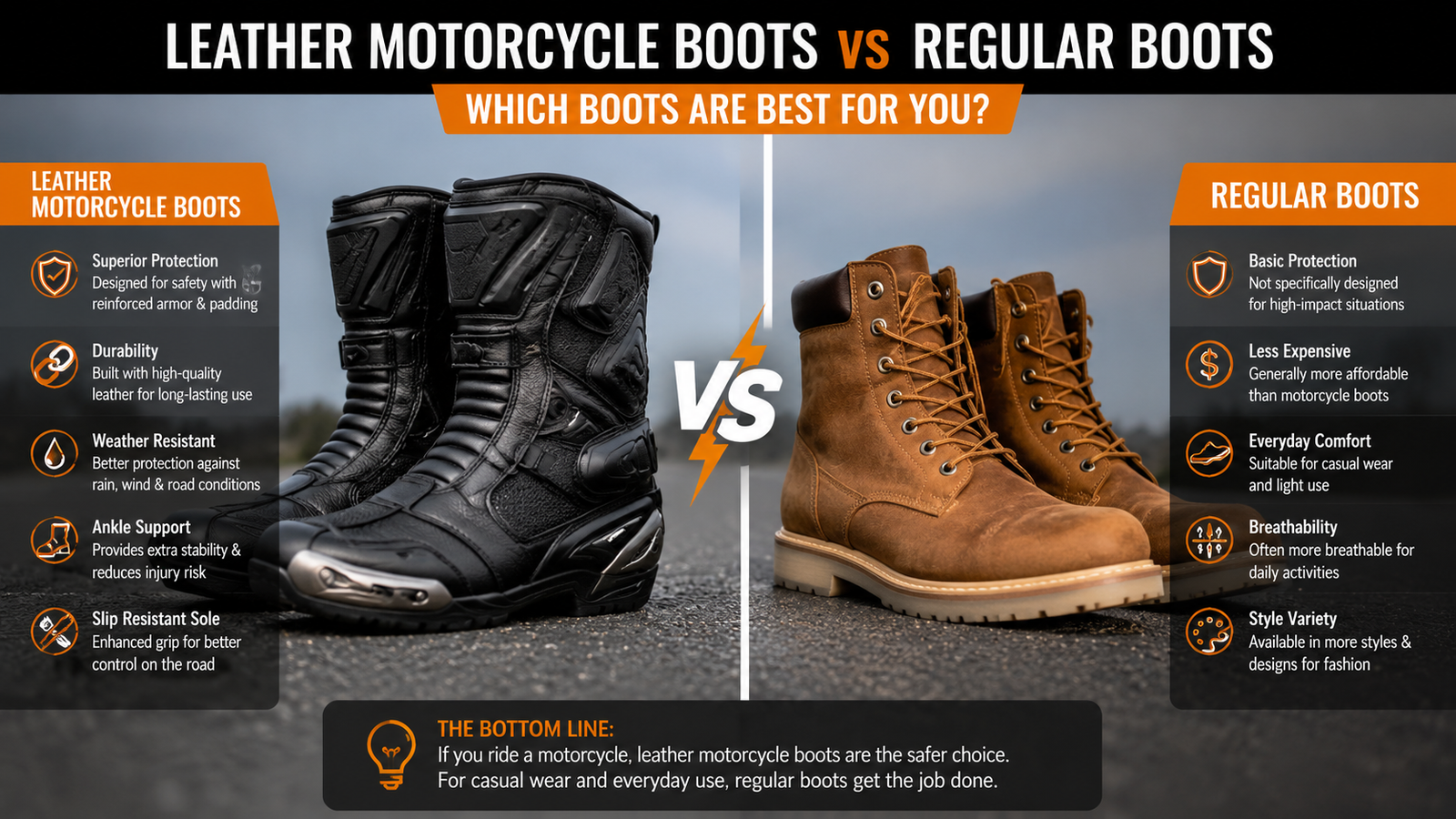
Leather motorcycle boots are designed for riding needs such as ankle support, grip, durability, shifting comfort, road protection, and secure fit. Regular boots may look similar, but they are usually made for walking, work, or fashion, not for motorcycle control, wind exposure, gear shifting, or riding-specific protection.
Your Boots Do More Than Complete the Outfit
Boots are easy to treat like a style choice. Riders often think about jackets, helmets, gloves, and vests first, while footwear becomes an afterthought. But your feet do a lot on a motorcycle. They help balance the bike, operate controls, grip the ground at stops, handle shifting, and stay exposed to wind, heat, debris, and changing road conditions.
That is why riding footwear matters. The wrong boots can feel slippery, weak, uncomfortable, or poorly shaped for bike controls. The right boots can give better confidence every time you stop, shift, brake, or put your foot down.A strong pair of riding boots should look good, but it also needs to work when you are actually on the road.
What Makes Motorcycle Boots Different?
Motorcycle boots are designed around riding function. They are usually built to provide better structure, foot coverage, sole grip, ankle support, and control comfort than regular casual boots.
A riding-focused boot may include:
- Strong leather construction
- Reinforced ankle area
- Durable sole
- Oil-resistant or slip-resistant outsole
- Secure closure
- Stiffer structure
- Toe protection
- Heel support
- Comfortable shaft height
- Better grip at stops
- Shifter-friendly toe area
The main difference is purpose. Regular boots are usually designed for walking, work, or fashion. Motorcycle boots are designed to help riders stay more secure and comfortable on the bike.
Regular Boots Are Not Always Road-Ready
Some regular boots look rugged, but that does not mean they are made for riding. A casual leather boot may have style, but it might not have the right sole, ankle support, stitching, or structure for motorcycle use.
Regular boots may have problems like:
- Slippery soles
- Soft ankle area
- Weak stitching
- Thin leather
- Loose fit
- Fashion-focused design
- Poor shifter comfort
- Limited protection
- Weak heel support
- Soles that wear quickly
This does not mean every regular boot is useless. Some work boots may perform better than fashion boots. But riders should still check whether the boot actually supports motorcycle use.
Ankle Support Matters
Ankle support is one of the biggest reasons riders choose motorcycle-specific footwear. Your ankles are exposed while riding and can be vulnerable during stops, slips, or sudden movement.
A proper riding boot should help support the ankle without making walking impossible. The boot should feel structured around the ankle and lower leg, especially compared to soft casual footwear.
Good ankle support can help with:
- Stability at stops
- Confidence while handling bike weight
- Better foot placement
- Reduced twisting movement
- Comfort during long rides
- More secure feel on uneven ground
Low casual boots or soft fashion boots may not provide enough ankle structure for riders who want better support.
Sole Grip Can Change Your Confidence
Grip matters every time your foot touches the ground. At a stoplight, gas station, parking lot, or wet road shoulder, the boot sole needs to feel stable.
A riding boot should have a sole that grips well and does not slide easily. Thin, smooth, or dress-style soles may look good, but they can feel unsafe on slick pavement.
Look for soles that offer:
- Strong traction
- Stable heel
- Durable rubber
- Oil resistance when possible
- Good contact with the ground
- Comfort while walking
- Secure feel on pegs or floorboards
A boot that slips when you put your foot down can quickly become a problem.
Shifting Comfort Is Important
Motorcycle boots need to work with the shifter. If the toe box is too bulky, too soft, or poorly shaped, shifting may feel awkward. If the boot upper is too thin, repeated shifting can wear it down or become uncomfortable.
A good riding boot should allow:
- Easy gear shifting
- Comfortable toe movement
- Proper feel under the shifter
- Durable toe area
- No excessive bulk
- No painful pressure from repeated shifts
Some riding boots include reinforced toe areas or shifter-friendly construction. This helps the boot handle repeated use in a way regular boots may not.
A rider choosing leather motorcycle boots should check how the toe area feels with their bike’s controls, not just how the boots look while standing.
Protection from Heat and Road Debris
Riders’ feet and lower legs can be exposed to engine heat, exhaust heat, flying debris, road dust, small rocks, and wind. A regular boot may not provide enough coverage or durability for those conditions.
Riding boots can help protect against:
- Hot surfaces
- Road debris
- Wind exposure
- Light impacts
- Scrapes
- Dirt and dust
- Weather changes
- Contact with bike parts
Leather is popular because it provides structure and coverage. A taller boot can also protect more of the ankle and lower leg than a low-cut casual boot.
Boot Height Makes a Difference
Boot height affects coverage, support, and style. Some riders prefer shorter boots for casual comfort, while others prefer taller boots for more coverage.
Common riding boot heights include:
Ankle Boots
Easy to wear and more casual, but offer less leg coverage.
Mid-Calf Boots
A balanced option for support, coverage, and everyday riding style.
Tall Motorcycle Boots
Offer more lower-leg coverage and a stronger riding look.
For cruiser riders, mid-calf or taller leather boots are often popular because they match classic biker gear and provide more coverage than casual ankle boots.
Closure Style and Secure Fit
A boot should stay securely on the foot. Loose boots can feel unstable while riding or walking around the bike.
Common closure types include:
- Zippers
- Laces
- Buckles
- Harness straps
- Pull-on design
- Combination closures
Laces can offer adjustability but should be managed carefully so they do not catch on bike parts. Zippers can make boots easier to put on and remove. Buckles and harness details can add both style and security.
The best closure depends on comfort, style, and how quickly you want to get in and out of the boots.
Leather Quality and Construction
Leather quality affects durability, comfort, and long-term wear. A good riding boot should feel strong without being painfully stiff.
Check for:
- Durable leather
- Strong stitching
- Reinforced stress points
- Solid sole attachment
- Comfortable lining
- Strong heel area
- Stable ankle structure
- Clean finishing
- Quality hardware
Poor construction can cause boots to wear out faster, especially around the sole, toe, heel, or zipper area.
A boot should feel like it can handle repeated rides, not just occasional casual wear.
Comfort for Walking and Riding
Motorcycle boots need to do two jobs. They should work on the bike, but they should also be comfortable enough when you get off the bike.
Some very stiff boots may feel protective but uncomfortable for walking. Some soft casual boots may feel comfortable for walking but weak for riding.
Look for a balance of:
- Riding structure
- Walking comfort
- Flexible enough movement
- Supportive sole
- Comfortable footbed
- Stable heel
- No painful pressure points
- Proper toe room
If you ride to events, rallies, restaurants, or work, walking comfort matters too.
Weather and Seasonal Use
Weather affects boot choice. Some boots work better in warm weather, while others are better for cold, wind, or rain.
For warm weather, riders may prefer:
- Lighter lining
- Comfortable leather
- Breathable design
- Lower or mid-height boots
- Taller boots
- Thicker leather
- Warmer lining
- Better wind coverage
For wet conditions, riders should look for boots designed with water resistance or weather protection. Regular leather boots may need extra care after wet rides.
No boot is perfect for every condition, so choose based on your most common riding weather.
Style: Riding Boots vs Casual Boots
Style still matters. Many riders want boots that match their bike, jacket, vest, gloves, and overall road identity.
Motorcycle boots often have a stronger biker look. They may include harness straps, buckles, taller shafts, heavier leather, or rugged soles. Regular boots may look more casual, western, formal, or workwear-inspired.
Popular riding styles include:
- Harness boots
- Engineer boots
- Cruiser boots
- Lace-up riding boots
- Zipper boots
- Tactical-style riding boots
- Classic black leather boots
Choose a style that matches your riding gear, but do not ignore function.
Why Regular Fashion Boots Can Be Risky
Fashion boots are designed mainly for appearance. They may use thinner leather, smooth soles, decorative hardware, or lightweight construction.
A fashion boot may look great with jeans, but it may not offer enough:
- Ankle support
- Sole grip
- Toe structure
- Riding durability
- Heat resistance
- Closure security
- Weather strength
- Shifter comfort
If the boot was not designed for road use, riders should be cautious. Style should not be the only reason to wear it on a motorcycle.
Are Work Boots Good for Riding?
Some work boots may be better than fashion boots because they often have stronger soles, thicker leather, and better structure. However, not all work boots are ideal for motorcycle riding.
Work boots may have issues like:
- Bulky toe boxes
- Heavy weight
- Limited flexibility
- Soles that do not feel right on pegs
- Laces that need extra care
- Poor shifter feel
They can work for some riders, but motorcycle-specific boots are usually better shaped around riding needs.
What Riders Should Look for Before Buying
Before choosing boots, riders should check the practical details.
Look for:
- Strong leather
- Ankle support
- Secure closure
- Good sole grip
- Comfortable toe box
- Stable heel
- Shifter-friendly shape
- Durable stitching
- Weather suitability
- Comfortable lining
- Good boot height
- Proper fit with riding pants or chaps
A boot should feel stable when standing, comfortable when seated, and secure when operating the bike.
Common Boot Buying Mistakes
Riders often choose boots by appearance only. That can lead to discomfort or poor performance.
Avoid these mistakes:
- Wearing fashion boots for riding
- Choosing slippery soles
- Ignoring ankle support
- Buying boots that are too loose
- Buying boots that are too tight
- Choosing bulky toes that affect shifting
- Forgetting weather conditions
- Ignoring closure security
- Not checking boot height
- Choosing boots only because they match an outfit
Footwear should look good, but it should also support real riding use.
How Boots Should Fit
Riding boots should feel secure but not painful. Your foot should not slide around inside the boot, but your toes should not feel crushed.
A good fit should:
- Hold the heel securely
- Allow slight toe movement
- Feel stable around the ankle
- Avoid pressure points
- Work with riding socks
- Stay secure when walking
- Feel comfortable on pegs or floorboards
- Not pinch while shifting
If the boot feels uncomfortable immediately, it may become worse during longer rides.
When to Choose Motorcycle Boots
Choose motorcycle boots if you ride regularly, want better ankle support, need grip at stops, or want footwear built around bike controls.
They are especially useful for:
- Cruiser riding
- Touring
- Highway riding
- Daily riding
- Long-distance routes
- Motorcycle rallies
- Riders using chaps
- Riders who want classic biker style
A good pair of leather motorcycle boots can complete the riding setup while also improving comfort, control, and confidence.
When Regular Boots Might Be Enough
Regular boots may be acceptable for very casual use if they are sturdy, fit well, grip properly, and cover the ankle. But riders should be honest about the limits.
A regular boot may work better if it has:
- Strong leather
- Good ankle coverage
- Durable sole
- Non-slip grip
- Secure closure
- Comfortable fit
- Stable heel
Even then, it may still lack riding-specific features. If you ride often, motorcycle boots are usually the better choice.
FAQs
Are regular boots okay for motorcycle riding?
Some sturdy regular boots may work for casual riding, but many are not designed for motorcycle use. Riders should check ankle support, grip, sole durability, closure security, and shifter comfort.
What makes motorcycle boots different?
Motorcycle boots are usually built with stronger structure, better ankle support, secure soles, durable leather, and features that support shifting, braking, stopping, and road exposure.
Are leather boots good for motorcycle riding?
Leather boots can be good for riding when they have strong construction, ankle coverage, grip, secure closure, and a riding-friendly shape. Fashion leather boots may not offer the same support.
Should motorcycle boots cover the ankle?
Yes, ankle coverage is important because it helps support and protect one of the more exposed areas of the foot and lower leg while riding.
Can I ride in work boots?
Some work boots may be suitable for casual riding, but they can be bulky or poorly shaped for shifting. Motorcycle-specific boots are usually better for regular riding.
Should motorcycle boots be tight or loose?
They should fit securely without squeezing. Your heel should stay stable, your toes should have slight room, and the boot should not slide around while walking or riding.
Do motorcycle boots need special soles?
A good riding boot should have a durable sole with strong grip. Slippery or thin soles can feel unstable when stopping, parking, or putting a foot down. For more information visit my website.
Conclusion
Riding footwear should be chosen for more than appearance. Regular boots may look rugged, but motorcycle boots are built around the way riders actually use their feet: stopping, shifting, gripping, balancing, and handling road conditions. Daniel Smart MFG offers leather boots, chaps, gloves, jackets, helmets, vests, and protective gear for riders who want their setup to feel complete from head to toe.