
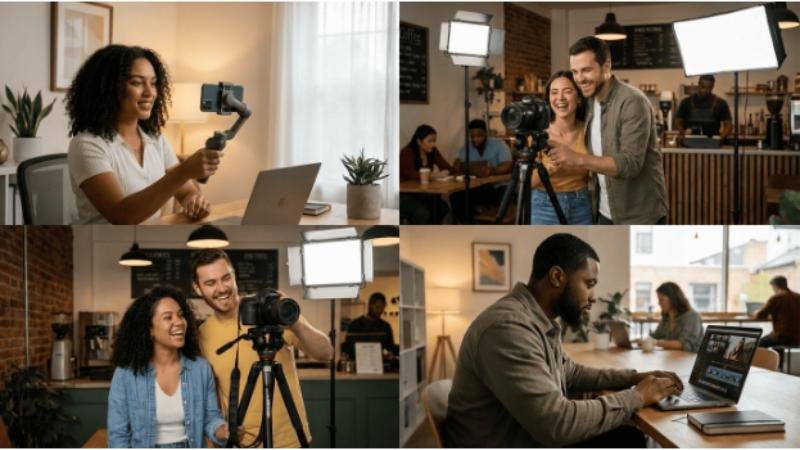
The landscape of digital storytelling is undergoing a fundamental transformation. For decades, the primary hurdles to professional video marketing were the astronomical costs of production and the steep learning curve of specialized software. Today, these barriers have largely dissolved. The emergence of sophisticated platforms has democratized high-end production. Leading this charge is higgsfield, a command center designed for professional creative orchestration. By integrating multiple high-tier models, it allows creators to move past simple text prompts. Traditional video production often required five-figure budgets for even basic commercial clips. Now, the shift is moving toward precision and repeatability. Professionals no longer ask if they can make a video: they ask how they can maintain total creative control. According to a detailed McKinsey report on the economic potential of generative AI, the technology is poised to automate up to 70 percent of business activities. In the realm of marketing, this automation is most visible in video content creation.
The Technical Edge: Seedance 2.0 and Frame Precision
At the heart of the modern video revolution is the Seedance 2.0 model. Developed by ByteDance, this state-of-the-art model represents a massive leap in generative capability. It is specifically built to handle the nuances of professional motion. Unlike basic tools that offer unpredictable results, this model focuses on character consistency. This means a character in frame one looks identical to the character in frame one hundred. For brands, this consistency is non-negotiable for identity and trust. A professional ai video generator must offer more than just moving pictures. It needs to provide frame-level precision. This level of detail allows users to specify exactly where elements should move and how they should interact within the scene. Higgsfield integrates Seedance 2.0 across all its subscription plans. This provides every user with access to cinematic multi-shot capabilities. It ensures that the output is not just a random generation but a purposeful piece of content.
Feature Comparison: Precision Versus Randomness
Most AI tools on the market operate as single-model generators. They might use one specific engine to turn text into video. This often results in a “slot machine” experience where users burn credits hoping for a usable result. Higgsfield takes a different approach by acting as a unified workspace. It aggregates industry-leading engines like Kling, Veo, and Sora. This allows users to choose the best engine for their specific creative needs. The ability to handle multiple assets simultaneously is a major differentiator. While some platforms struggle with a single image reference, this platform can process up to 12 assets at once. These assets include text, images, videos, and audio files. The integration of native audio sync is another critical feature. Most AI video tools require external software to match lip movements or sound effects. Seedance 2.0 handles this natively, ensuring that the visual and auditory elements are perfectly aligned from the start.
Multi-Shot Capabilities and Creative Workflow
In traditional filmmaking, a scene is composed of multiple shots: wide shots, close-ups, and over-the-shoulder angles. Most AI generators only produce single, isolated clips. This makes storytelling difficult and fragmented. The modern ai video generator environment supports complex multi-shot sequences. Users can define different camera angles and motion paths within a single project. This mirrors the workflow of a professional film studio rather than a basic filter app. Creative orchestration is the key to this new workflow. Instead of typing a long prompt and hoping for the best, users use “first-and-last image” referencing. This allows the AI to understand the exact starting point and ending point of a sequence. By providing these advanced motion controls, higgsfield eliminates the guesswork. High-level creators can now direct the AI with the same specificity they would use with a human camera operator. This results in content that meets the high stakes of professional advertising.
Use Cases: Where Professionals Win
Direct-to-consumer (DTC) advertising is perhaps the most immediate beneficiary of this technology. These brands need to test hundreds of creative variations to see what resonates with their audience. Doing this with traditional production is impossible at scale. Cinematic storytelling is another area where this technology excels. Filmmakers can use an ai video generator to storyboard entire sequences or create final-render visual effects. This reduces the time spent in expensive post-production suites. Social media marketing also demands a high volume of high-quality content. The “Virality Predictor” tool on certain platforms bridges the gap between art and data. It helps creators understand which visual styles are likely to perform best on specific social channels. For global brands, the ability to localize content is vital. With native audio sync and character consistency, a brand can create a campaign once. They can then adapt it for different markets without losing the core visual identity.
Professional Pros and Cons of Modern AI Video
There are several advantages to using a professional-grade ai video generator. The primary benefit is the reduction in “token waste.” Because the tools are more precise, users spend less time generating unusable content. The modern architecture of these platforms also allows for rapid updates. As new models like Sora or Veo become available, they are integrated into the command center. This prevents users from needing multiple subscriptions to different services. However, there are still challenges to consider. Even with advanced tools, there is a learning curve to mastering motion reference uploads. Professionals must spend time understanding how to “bend” the AI to their specific vision. Another consideration is the hardware requirement. While many of these tools are cloud-based, managing high-resolution assets still requires a stable and fast internet connection. For those in high-stakes environments, the transition from traditional to AI workflows requires a shift in mindset.
Comparison: Higgsfield vs Single-Model Competitors
| Feature | Single-Model Tools | Higgsfield |
| Model Access | One specific engine | Multi-model (Sora, Kling, Veo, etc.) |
| Asset Handling | Usually 1-2 assets | Up to 12 assets (Text, Image, Video, Audio) |
| Motion Control | Limited to basic prompts | Advanced motion-reference uploads |
| Character Consistency | Often inconsistent | High (using Seedance 2.0) |
| Audio Integration | Post-production required | Native audio sync |
Most competitors focus on the “magic” of AI, while higgsfield focuses on the “control” of the creator. This distinction is vital for those who need repeatable results. A marketer cannot build a brand on random successes. The inclusion of specialized editing environments makes a significant difference. It is no longer about just “generating” a clip. It is about refining and layering that clip until it meets studio-grade standards. By offering features like the Virality Predictor, the platform proves it understands the business of video. It is not just a creative toy: it is a piece of essential infrastructure for digital marketing. This allows users to merge artistic vision with data-driven decision making.
Final Verdict: The New Standard for Video Production
The biggest barrier to video marketing is no longer a lack of money or a lack of technical skill. The barrier is now the ability to orchestrate complex AI tools to achieve a specific result. The era of the “prompt engineer” is evolving into the era of the “creative director.” Using an ai video generator has become a standard requirement for any serious marketing team. It provides the speed needed to stay relevant in a fast-moving digital economy. It also provides the quality needed to capture consumer attention in a crowded marketplace. Higgsfield stands out as the premier choice because it prioritizes the user’s creative vision. By aggregating the world’s best AI models and adding professional-grade controls, it solves the problem of unpredictability.
It allows creators to produce cinema-grade results at a fraction of the traditional cost. As we move forward, the distance between an idea and a finished video will continue to shrink. For those who embrace these new tools, the possibilities for storytelling are virtually limitless. The future of video marketing is not just automated: it is controlled, precise, and professional. In summary, the transition to AI-driven production is inevitable for the industry. Platforms like higgsfield provide the necessary bridge between raw AI power and the polished output required by brands. This technology represents the next generation of digital content infrastructure.