
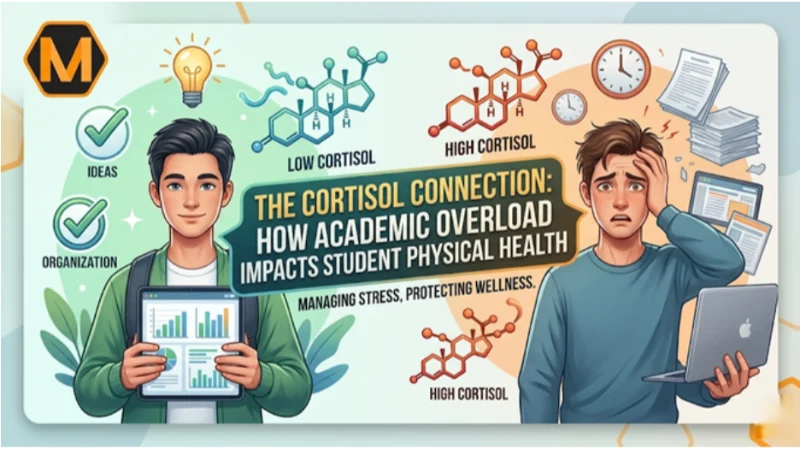
The transition into higher education is often framed as an intellectual journey, yet for many undergraduate students, it is equally a physiological marathon. While the focus remains on GPAs and graduation dates, the body quietly keeps score of the late nights and the relentless pressure of looming deadlines. Central to this physical response is cortisol—the body’s primary stress hormone. While cortisol is essential for survival, its chronic elevation due to academic overload is becoming a silent health crisis on campuses globally. Understanding how this biological mechanism operates is the first step in reclaiming both your health and your academic performance.
The modern academic environment is more demanding than ever, frequently forcing students to choose between their physical well-being and their grades. When you are juggling multiple modules, part-time work, and extracurricular commitments, your brain perceives this “overload” as a constant threat. To help manage this pressure, many students now look for professional assignment help to balance their responsibilities and lower their daily stress levels. By outsourcing some of the heavy lifting, it becomes possible to prevent the “fight-or-flight” response from becoming a permanent state of being, allowing the body to return to a state of rest and recovery.
The Biology of Burnout: What is Cortisol?
Cortisol is produced by the adrenal glands, located atop your kidneys. It is part of the HPA (hypothalamic-pituitary-adrenal) axis, which manages how your body reacts to stress. In short bursts, cortisol is your friend; it increases glucose in the bloodstream, enhances your brain’s use of that glucose, and increases the availability of substances that repair tissues.
However, the “academic survival” mode is not a short burst. It often lasts for months. When cortisol stays high, it starts to interfere with other essential functions. It suppresses the digestive system, the reproductive system, and growth processes. This is why, during finals week, you might experience a total loss of appetite or, conversely, intense cravings for high-sugar “comfort” foods.
Physical Manifestations of Academic Stress
The impact of high cortisol isn’t just “in your head.” It manifests across various bodily systems:
- Immune System Suppression: Ever noticed how you get a cold the moment a major project is finished? High cortisol limits the production of “pro-inflammatory cytokines,” making you more susceptible to viruses and infections.
- Sleep Disruption: Cortisol and melatonin (the sleep hormone) have an inverse relationship. When cortisol is high at night because you’re worrying about a 9:00 AM deadline, melatonin is suppressed, leading to insomnia or poor-quality REM sleep.
- Gastrointestinal Issues: The “gut-brain axis” is highly sensitive to stress. Academic overload can lead to chronic bloating, IBS-like symptoms, and indigestion.
Managing Specialized Academic Pressures
Not all academic paths carry the same type of stress. For those in vocational or high-stakes clinical fields, the pressure is uniquely intense because it involves both theoretical knowledge and practical life-or-death skills. For instance, nursing students must master complex pharmacology while enduring long clinical shifts.
| Degree Type | Primary Stressor | Physical Risk |
| Liberal Arts | High Volume Reading/Research | Eye strain, Sedentary fatigue |
| STEM | Complex Problem Solving | Cognitive “fog,” Neural exhaustion |
| Healthcare | Clinical Rotations + Theory | Chronic back pain, Immune depletion |
| Business | Networking + Deadlines | Social anxiety, Sleep deprivation |
Managing this specific burden requires targeted resources. Many future healthcare professionals utilize nursing assignment help provided by experts at MyAssignmentHelp Services to ensure their theoretical coursework remains top-tier without sacrificing the sleep necessary for safe clinical practice. Utilizing such specialized support allows students to focus on hands-on skills while maintaining a healthy physiological balance.
The “Hidden” Symptoms: How to Spot Overload Early
Because undergraduate life is inherently busy, it is easy to dismiss symptoms of academic overload as “just being a student.” However, if you find yourself experiencing the following, your cortisol levels may be reaching a dangerous plateau:
- Brain Fog: The inability to concentrate on a single paragraph for more than a minute.
- Persistent Muscle Tension: Specifically in the jaw (bruxism), shoulders, and lower back.
- Irritability: Snapping at friends or family over minor inconveniences.
- Changes in Skin: Cortisol increases oil production in skin glands, leading to “stress acne.”
Strategies for Cortisol Regulation
Lowering your cortisol isn’t about doing “less” work; it’s about doing work more effectively and giving your body “safety signals” throughout the day.
1. The Power of Movement
You don’t need a two-hour gym session. Research shows that just 20 minutes of brisk walking can significantly lower serum cortisol levels. Movement tells your brain that you have “escaped” the metaphorical predator (the deadline) and it is safe to down-regulate.
2. Nutritional Buffering
When stressed, we reach for caffeine and sugar. Unfortunately, these act as “liquid stress,” causing spikes and crashes that further stress the adrenals. Focus on Magnesium-rich foods like spinach, pumpkin seeds, and dark chocolate, which help regulate the nervous system.
3. Strategic Boundaries
Learn the art of “Strategic Academic Outsourcing.” There is no badge of honor for physical collapse. If a specific essay or data analysis project is causing physical illness, using a reputable service allows you to protect your long-term health.
Cultivating a Global Perspective on Wellness
The “hustle culture” in academia is a global phenomenon, from the high-pressure environments in East Asia to the competitive universities of North America and Europe. However, the most successful students are not those who work until they collapse, but those who understand their biological limits.
By viewing your body as a high-performance machine, you realize that maintenance—rest, nutrition, and stress management—is not a luxury. It is a prerequisite for academic excellence. When you reduce the “noise” of constant stress, your cognitive clarity increases, leading to better grades with less effort.
Frequently Asked Questions (FAQ)
Q1: How long does it take for cortisol levels to return to normal after a deadline?
Ans: Generally, if you engage in active recovery (sleep and hydration), levels can begin to normalize within 24 to 48 hours. However, if you jump immediately into the next project without a break, your body remains in a “high-alert” state.
Q2: Can supplements help lower academic stress?
Ans: Adaptogens like Ashwagandha and Rhodiola have been shown in studies to help the body manage cortisol, but they should never replace fundamental habits like sleep and proper time management.
Q3: Is all stress bad for my health?
Ans: No. There is a concept called “Eustress” (positive stress). This is the excitement you feel before a presentation or a sports game. It becomes “Distress” only when it is chronic and perceived as something you cannot control.
Q4: How does academic overload affect long-term health?
Ans: If left unchecked for years, chronic high cortisol is linked to increased risks of cardiovascular disease, Type 2 diabetes, and clinical anxiety disorders. Taking steps now as an undergraduate is vital for your future self.
Recommended Resources for Academic Wellness
To maintain a healthy balance between your physical health and your academic requirements, the following resources can provide both practical support and physiological relief:
- Mindfulness & Meditation Apps: Tools like Headspace or Calm offer specific modules for “Student Stress” and “Focus,” helping to lower cortisol through guided breathing exercises.
- Academic Planning Tools: Use Notion or Trello to visualize your semester. Breaking large projects into micro-tasks prevents the “overload” sensation that triggers the fight-or-flight response.
- Nutritional Guidance: Websites like EatRight.org provide evidence-based advice on “brain foods” that stabilize blood sugar and support adrenal health during exam periods.
About The Author
I am Min Seow, a dedicated academic strategist and digital education consultant with MyAssignmentHelp Services. With years of experience in the EdTech sector, I specialize in helping students navigate the complexities of higher education by providing structured academic solutions that prioritize both quality and student wellbeing.